
Hepatitis Queensland’s Annual Report
2025 – 2026
Acknowledgement of Country
We acknowledge the Traditional Owners of Country throughout Australia and recognise their continuing connection to land, waters and culture. We pay our respects to Elders past, present and emerging. We acknowledge that sovereignty was never ceded in Australia, and recognise that Aboriginal and Torres Strait Islander people are disproportionately affected by viral hepatitis and liver disease. Hepatitis Queensland is committed to working with local Indigenous organisations to shape a health system which responds to the needs and aspirations of the community.
Hepatitis Queensland
Hepatitis Queensland is the state’s peak body for viral hepatitis. For 30 years we have worked to prevent viral hepatitis, to improve access to testing, treatment and care, and to reduce the stigma that keeps people away from both.
We do that through education, health promotion and advocacy, and through partnerships with health services, community organisations and Aboriginal and Torres Strait Islander Community Controlled Health Services. We also deliver targeted hepatitis C point-of-care testing in correctional settings, where people face some of the highest barriers to mainstream healthcare.
A message from our CEO and Chair

Thirty years in, the question facing Hepatitis Queensland is no longer whether viral hepatitis can be eliminated. It is whether we make up the ground between what Queensland has committed to and where we are. Queensland’s hepatitis B and hepatitis C plans set the direction to 2030. Nationally we are not on track for the hepatitis B targets, where the largest gap is in keeping people in regular monitoring. Hepatitis C is further along, with prevalence and new infections falling, but the mortality target is out of reach unless more people start treatment than are starting now.
The Viral Hepatitis and Liver Cancer Queensland Report, which we produced with Cancer Council Queensland, brings together the latest Queensland data on liver cancer, hepatitis B and hepatitis C. Hepatitis B and hepatitis C account for around half of liver cancer cases in this state, which makes reducing viral hepatitis the single greatest opportunity we have to reduce liver cancer deaths. It is set out in full on the following pages.
That matters because liver cancer is the fastest growing cause of cancer death in Queensland, at a time when mortality is improving for most other cancers. The trend is not fixed, and we have the tools to change it. The difficulty is that the people who would benefit most are the least likely to reach them.
Our work this year was built around closing that distance. We met people where they already are: in community, in primary care, in alcohol and other drug services, and in correctional settings. Community hepatitis C testing and liver clinics, education sessions, resources and outreach helped people reach testing, liver health checks and treatment. We also worked with health and community workforces to build their confidence in raising hepatitis with the people in front of them. Behind every number in this report is a person who knows something they did not know before, or who is now in care.
Our Lived-Living Experience Advisory Network also continued to grow. Their perspective challenges us, keeps us grounded, and is the most reliable guide we have to whether our work is any use to the people it is meant for.
That evidence and that experience have shaped our priorities for the year ahead. We will keep working for better access to testing, treatment and care. We will keep building a stronger hepatitis B response. We will keep backing culturally safe, community-led approaches, because they work. And we will keep our focus on the people who face the steepest barriers, including people in contact with the justice system.
We do none of it alone. This year our partnerships extended into cancer prevention, primary care, Aboriginal and Torres Strait Islander health, research and government, and each of them takes us beyond what we could reach by ourselves.
My thanks go to the Hepatitis Queensland team. They are the people who have the conversations, run the clinics, write the resources, answer the phone and keep hepatitis on the agenda. To our funders, who back work that takes time to show results. To our partners, who share the work and the risks that come with trying something new. And to our Board, and to Lyn Hamill as Chair, for the direction, the challenge and the steady support they have given me and the team
Awareness matters, but it was never the whole job. What we are working towards is fewer Queenslanders developing liver disease and liver cancer, more people diagnosed and connected to care that works, and viral hepatitis eliminated as a public health threat in this state.
There is a great deal still to do. After thirty years we have the foundations, the partnerships and the evidence, and we intend to use them.
A/Prof Anna Hawkes
Chief Executive Officer

Hepatitis Queensland turned 30 this year. An anniversary invites reflection, and the Board used it to ask a harder question than how far we have come: whether we are heading in the right direction for the work ahead.
The Board’s job is to hold the organisation to its purpose, satisfy itself that it is soundly run, and set the direction. Three things shaped our thinking this year.
The first is that the case for eliminating viral hepatitis in Queensland is now an evidence case rather than an advocacy one. The report Hepatitis Queensland produced with Cancer Council Queensland changed the terms of the conversation in this state. Holding the state’s evidence shapes what we take to government, what we build for the workforce and where we direct our effort. The Board sees that as core to our role.
The second is that the distance between what is achievable and what is actually happening has not closed, and in hepatitis B it has widened. The Board would rather govern an organisation that names that plainly than one that reports around it.
The third is the discipline of matching commitments to capacity. Hepatitis Queensland is a small organisation asked to cover a large state, and the Board has kept a close watch on where it commits, so that the work we take on is work we can do properly.
Those three judgements are now shaping a new strategic plan to 2030, aligned with Queensland’s Hepatitis B and Hepatitis C 2030 Plans, which the Board has begun work on with the leadership team.
On behalf of the Board, I want to thank our Chief Executive Officer, Anna Hawkes, and the Hepatitis Queensland team. It has been a full year, and they have met it with commitment, expertise and care. I also thank my fellow directors for their work and their judgement, our funders and partners for their confidence, and the people with lived and living experience who shape this organisation’s direction.
Thirty years in, the foundations are sound and the purpose is unchanged. We look forward to the year ahead.
Lyn Hamill
Board Chair
Our Impact in Numbers
0
Participants in viral hepatitis education sessions
0
Online resources accessed
0
Physical resources distributed
0
People tested in the community
0
Liver Scans (FibroScans) performed
0
Grants we awarded
Our Highlights
In 2025–26, Hepatitis Queensland continued to strengthen awareness, expand access to testing and care, build partnerships, and advocate for better outcomes for Queenslanders affected by viral hepatitis and liver disease. From the launch of the Queensland Liver Cancer and Hepatitis Report to community outreach, education and lived experience engagement, these highlights reflect the collective efforts of our team, partners and community.
Here’s an overview of what we accomplished this year.
Click the arrows to see more.
30 years of Hepatitis Queensland
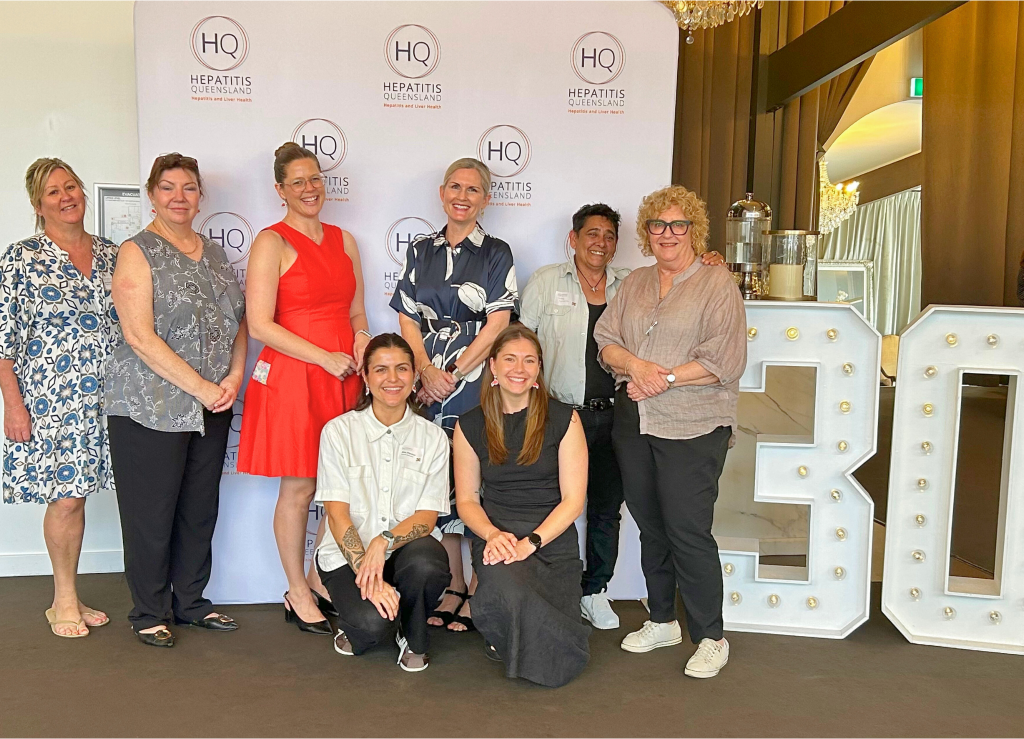
Hepatitis Queensland marked 30 years of work on liver health and viral hepatitis at its 30th Anniversary Forum on 23 October 2025, bringing together more than 80 people from across the blood borne virus and sexually transmissible infections sector.
The forum looked back at the organisation’s history and forward to the shared goal of eliminating hepatitis B and hepatitis C as a public health threat by 2030. Clinicians, public health professionals, government representatives, lived experience advocates and community partners came together to strengthen collaboration, share knowledge and identify practical opportunities to improve prevention, testing, treatment and management. The program included presentations on the Queensland Hepatitis B Plan 2030 and the Queensland Hepatitis C Plan 2030. The day also honoured the people and communities who have shaped those three decades. A commemorative anniversary video brought together reflections from CEO A/Prof Anna Hawkes, founding member A/Prof Prof Linda Selvey, former long-serving staff member Lana Richardson, Dr Joss O’Loan, and Aboriginal and Torres Strait Islander Cultural Lead Nicky Guivarra. We were glad to share the event with Hepatitis Queensland’s founding CEO, Jeff Ward.
It was both a celebration of what has been achieved and a call for the collective action still needed to keep Queensland on track.
The Evidence
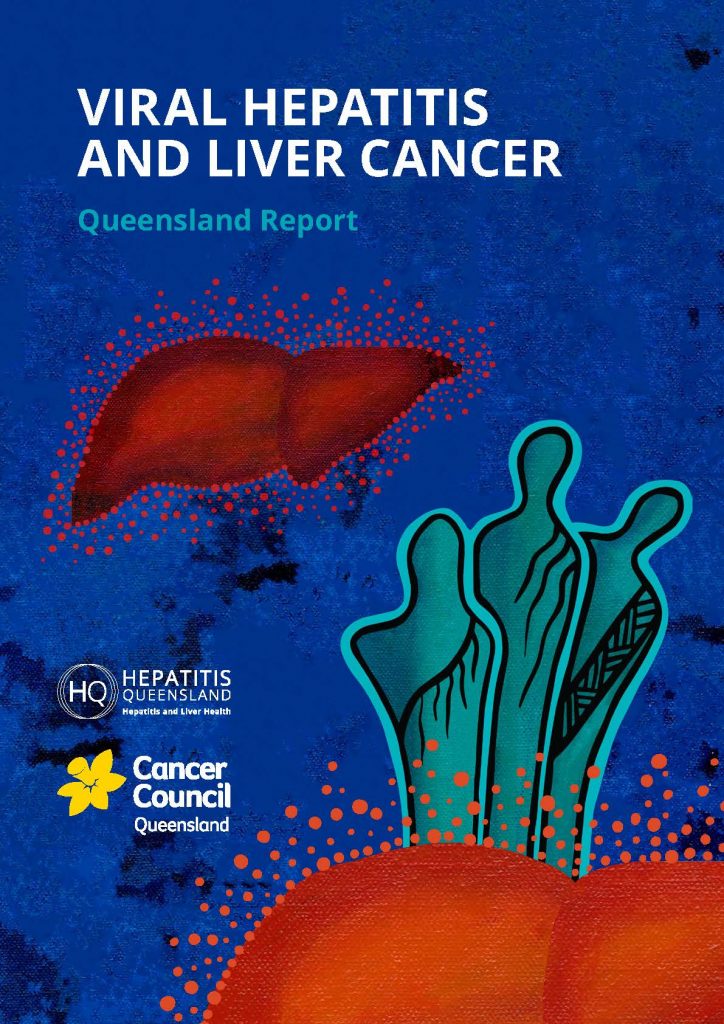
In April 2026, Hepatitis Queensland and Cancer Council Queensland released the Viral Hepatitis and Liver Cancer Queensland Report. It gives Queensland a picture of the problem it did not previously have.
The report brought together data, evidence and lived-living experience to show how viral hepatitis and liver cancer are connected in Queensland. Liver cancer is now the fastest growing cause of cancer death in the state, with deaths more than three times higher than in the 1980s. That is happening while mortality improves for most other cancers.
The report also showed the trend is not inevitable. Preventing viral hepatitis, increasing testing, improving access to treatment and supporting people to stay in care all reduce the risk of liver cancer. The difficulty is that the burden does not fall evenly. Aboriginal and Torres Strait Islander peoples, people in regional and remote communities, culturally and linguistically diverse communities and people in custodial settings all carry more of it, and all face more obstacles to the care that would help.
Where Queensland sits on each virus differs sharply. Hepatitis C is well advanced: 91 per cent of people are diagnosed, treatment coverage has reached 67 per cent, and more than 24,000 Queenslanders have received curative treatment since 2016. Hepatitis B is not. Of an estimated 35,000 people living with chronic hepatitis B, 66 per cent have been diagnosed, 21 per cent are in care and 10 per cent are on treatment, with coverage moving from 5.9 to 9.9 per cent across the same period. Aboriginal and Torres Strait Islander Queenslanders carry nearly three times the state rate of chronic hepatitis B. Together the two viruses cause around half of all liver cancer.
From publication to advocacy tool
The report has given our conversations with government, health services and sector partners an evidence base they did not have before. It has also helped place hepatitis inside the wider discussion about liver health, cancer prevention and health equity, rather than alongside it.
The launch generated substantial media interest, including ABC News and InDaily, and brought Queensland-specific data into a public conversation that rarely features it. The ABC coverage paired expert commentary from our CEO, Anna Hawkes with the lived-living experience of Dave Clune, which is what made the numbers land. Stories like his are a reminder that behind every statistic is a person.
We presented the findings to the national sector at the 16th Australasian Viral Hepatitis Conference in Walyalup (Fremantle), sharing Queensland’s experience and contributing to national discussion on hepatitis elimination and liver cancer prevention.
The focus now is turning the evidence into action. The report underpins the priorities set out through the rest of this report and will continue to shape our advocacy, partnerships and service planning.
Hepatitis C: Finding People and Curing Them
Overview
Hepatitis C can be cured, and most Queenslanders who need that cure have had it. The people still to be reached are concentrated in correctional settings and among people who inject drugs, which is where our work sits and why almost none of it happens in a clinic waiting room.
Community hepatitis C point-of-care testing
Hepatitis Queensland delivered 39 point-of-care testing visits in the community for people on corrections and treatment orders including at Community Corrections Centres around Brisbane and at the Queensland Drug and Alcohol Court (Brisbane Magistrates Court). We also provided 319 FibroScans in these locations.
This work was delivered under the National Australian Hepatitis C Point-of-Care Testing Program.
| Stage | People |
| Tested | 214 |
| Detectable hepatitis C (RNA positive) | 19 |
| Prescribed treatment | 15 |
| Commenced treatment | 12 |
These testing visits reach people who often have good reason to avoid mainstream healthcare. Turning up where people already have to be, rather than asking them to come to us, removes most of the reasons an appointment does not happen. Alongside testing and treatment, the visits create openings for education, peer engagement, prevention and connection to ongoing primary care.
Our Cultural Lead has been central to this, building the trust that makes engagement possible with the communities most affected.
Prisons
People in custody remain a priority for our health promotion, testing and education work, and our approach combines information, workforce education, testing support and pathways into care.
High-intensity testing campaigns
We continued to work with the Kombi Clinic, Queensland Injectors Health Network, Flinders University and the Kirby Institute on high-intensity hepatitis C testing campaigns in Queensland correctional centres. Hepatitis Queensland staff attended three correctional centres to provide point-of-care testing support. These campaigns bring testing and treatment directly into custodial environments and are an important part of Queensland’s hepatitis C response.
Prison workforce education
Our training package continued to be delivered through the Queensland Corrective Services (QCS) Academy as part of the corrections workforce’s viral hepatitis and blood-borne virus education. During 2025–26, 5600 QCS staff were enrolled and 5229 completed or passed the training, including 22 of the 29 community corrections case managers enrolled.
Delivering through the QCS Academy embeds hepatitis knowledge across the workforce, covering both staff safety and how to work appropriately with people living with hepatitis B or hepatitis C.
We also supported West Moreton Hospital and Health Service as hepatitis C point-of-care testing expanded across correctional centres in the region. A pre-recorded workforce education video we developed is being used to help prison health staff build the confidence to deliver timely testing and care.
Education inside
Through the Cultural Centre at Borallon Training and Correctional Centre, we continued to provide culturally responsive education for Aboriginal and Torres Strait Islander people in prison. Two sessions reached 20 participants, and 348 hepatitis-related resources were distributed. The sessions covered viral hepatitis, liver health, testing and treatment pathways, and practical strategies for staying well inside.
Working with Queensland Corrective Services
Quarterly meetings with the Office of the Deputy Commissioner supported collaboration across correctional settings, including work to improve access to hepatitis information for people in prison.
Alcohol and other drug services
Alcohol and other drug services (AODS) are already trusted by many of the people we most need to reach, which makes them one of the most efficient places for hepatitis C point-of-care testing visits.
Our partnership with Ipswich AODS enabled walk-in hepatitis C point-of-care testingin Ipswich, with outreach visits extending to Esk, Boonah and Laidley. Between January and June 2026, there were 17 visits, 101 FibroScans were undertaken and more than 400 hepatitis-related resources were distributed. Testing was under the National Australian HCV Point-of-Care Testing Program, and several clients accessed Hepatitis Queensland’s Treatment and Support Fund to commence hepatitis C treatment.
Aboriginal and Torres Strait Islander communities
The hepatitis C strand of Strong Liver. Strong Mob., built on the former Hep Check Connect and Cure program, continued to support testing, diagnosis and treatment through Aboriginal and Torres Strait Islander Community Controlled Health Services.
Working alongside services across the state, we supported community testing days, provided clinical support and workforce education, and directed World Hepatitis Day grant funding to community-led activity.
Treatment and Support Fund
Cost and practical obstacles still stop people finishing hepatitis C treatment they have already started. The Treatment and Support Fund exists to remove them, and Queensland Health funding allowed us to continue it through 2025–26. The fund supported people reached through our community hepatitis C point-of-care testing visits, connecting them with curative treatment they might otherwise not have completed.
Hepatitis B: Diagnosis, Monitoring and Lifelong Care
Overview
Most adults who are exposed to hepatitis B clear the virus and never think about it again. When infection happens in infancy or early childhood, which is how most people living with hepatitis B in Australia acquired it, it usually becomes lifelong.
Chronic hepatitis B cannot be cured, but it can be controlled. Not everyone needs treatment, and whether someone needs it changes over the years, which is why monitoring matters. Regular checks pick up the point at which treatment should start, and find liver cancer early enough to do something about it. Without them, people find out too late. The Viral Hepatitis and Liver Cancer report shows that most Queenslanders living with chronic hepatitis B are not having those checks.
That is why our hepatitis B work looks different from our hepatitis C work. Hepatitis C is a short course of tablets and a cure. Hepatitis B is a relationship with the health system that has to last decades. Finding people matters, but keeping them connected matters more, and that depends on the things we can influence: data that shows where people are being lost, a workforce confident enough to manage hepatitis B in primary care, clinical tools at the point where decisions are made, and partnerships that reach communities the mainstream system does not.
Strengthening hepatitis B care in Brisbane South
Brisbane South Primary Health Network (PHN) carries the highest burden of chronic hepatitis B in Queensland. An estimated 13,238 people in the region are living with the condition, a prevalence of 0.98 per cent, and two in three are not receiving the monitoring or treatment they need. Without regular care, people are at greater risk of serious liver disease and liver cancer.
With funding from Brisbane South PHN, we analysed general practice data through Primary Sense, reviewed the evidence and interviewed key stakeholders across primary care, specialist services and Aboriginal Community Controlled Health Services. The result is a clear local picture of where people are falling out of care, and why.
Our report, Strengthening hepatitis B care in Brisbane South, Queensland, sets out eight practical recommendations for all stakeholders in the region. With GPs now able to prescribe hepatitis B antivirals without s100 accreditation, it offers a timely roadmap to close the gap.
Aboriginal and Torres Strait Islander communities
Strong Liver. Strong Mob. carries forward the hepatitis B work established as B Stronger, working with Aboriginal and Torres Strait Islander Community Controlled Health Services to improve awareness, testing and management.
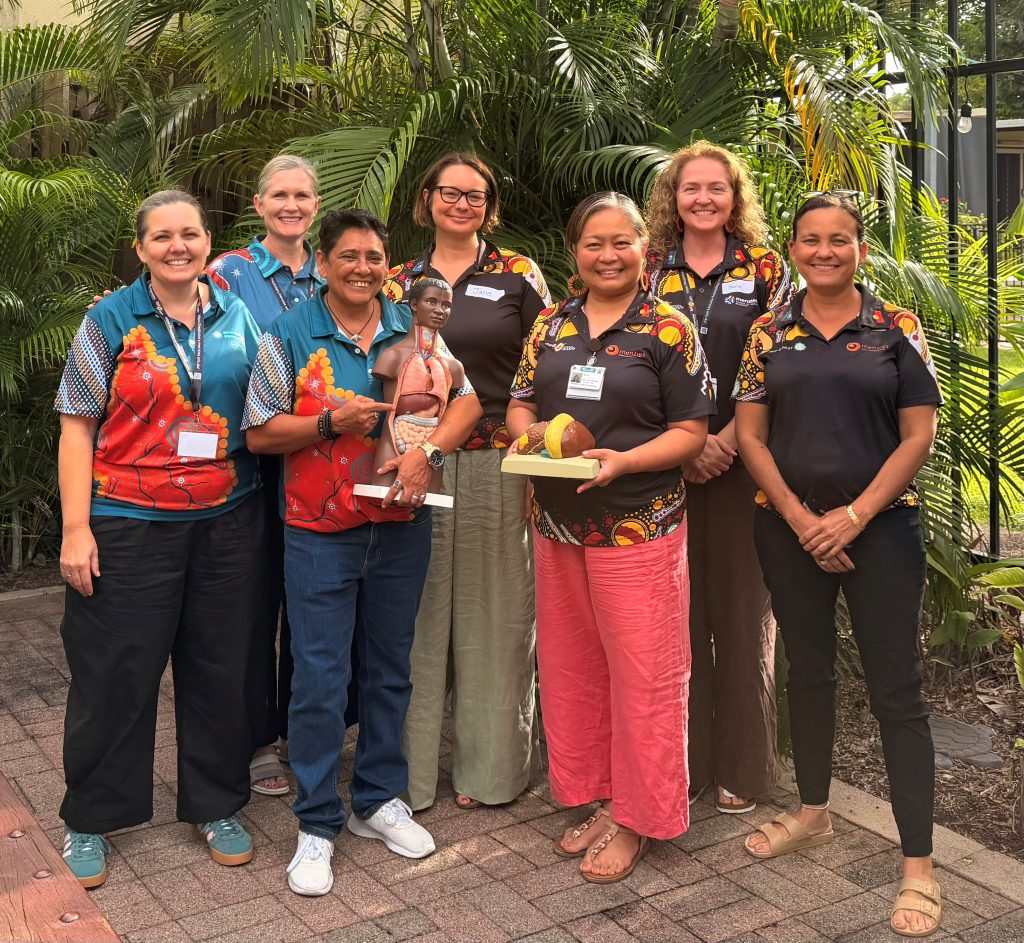
Through a partnership with the Hep B PAST Plus team at Menzies School of Health Research, we delivered workforce education workshops on Horn Island and Bamaga, attended by Aboriginal Health Workers from across the region. Holding the workshops in the Torres Strait rather than expecting the workforce to travel south is the difference between a session people can attend and one they cannot.
Queensland Hepatitis B Alliance
Hepatitis Queensland continued to chair the Queensland Hepatitis B Alliance, which gives stakeholders across the state a place to share knowledge, coordinate and get more out of the effort collectively than any member manages alone.
Workforce and clinical tools
Most people with chronic hepatitis B will be managed in primary care, so the practical question is whether the workforce feels confident enough to do it.
Clinical tools
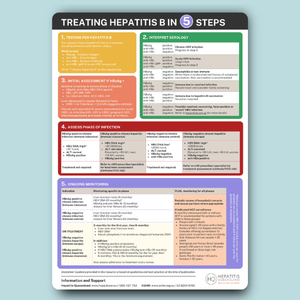
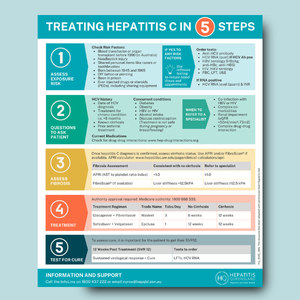
Following stakeholder consultation and clinical review, we developed a Treating Hepatitis B in 5 Steps clinical mouse mat, complementing the hepatitis C mouse mat already in use. It puts the decision points where the decisions are made.
The online module
Our hepatitis B online learning module continued to support the non-clinical workforce, covering transmission, testing, vaccination, care and management, with a strong focus on stigma and discrimination. During the year it was made available through Brisbane South PHN’s internal learning management system, Discover PHN.
Twenty-one people completed the module. As we move forward we will take a more deliberate approach to promotion through PHN communication channels, along with conversations about making the module available through other PHNs.
Education sessions delivered
We were invited to present at the Queensland Aboriginal and Torres Strait Islander (QAIHC) Joint Chronic Conditions Workshop in June 2026, engaging 30 Aboriginal and Torres Strait Islander Health Workers, Health Practitioners and Practice Nurses from 17 urban, regional and very remote locations. The session covered hepatitis B and hepatitis C screening and ongoing care and included the interactive Transmission Game. Eleven orders for Strong Liver. Strong Mob. resources followed, extending the campaign into those services. One participant described our education as a standout.
In May 2026 we delivered two online sessions for the team at Nhulundu Health Service in Gladstone, covering hepatitis B and hepatitis C, with six staff at each. Feedback was positive and the practice team recommended the education to other Aboriginal Community Controlled Health Organisations.
Seasonal and migrant workers
We continued our partnership with Central Queensland University on Reducing the impact of chronic hepatitis B in seasonal workers in regional Queensland. As a member of the project Steering Committee, Hepatitis Queensland supported engagement between researchers and community and health sector partners, helped identify service providers and contributed to the practical recommendations. The project concluded in April 2026, with the final workshop identifying opportunities to support Pacific Australia Labour Mobility workers and their employers, including connections to HepLink and other viral hepatitis resources.
Hepatitis B and Hepatitis C
Strong Liver. Strong Mob.
Strong Liver. Strong Mob. brought the former B Stronger and Hep Check Connect and Cure programs together under one approach, working with Aboriginal and Torres Strait Islander Community Controlled Health Services across Queensland.
We strengthened regional connections through a number of services, including Goondir Health Services, Nhulundu Health Service, Townsville Aboriginal and Islander Health Service, the Institute for Urban Indigenous Health and health services across Far North Queensland. Support included community testing days, workforce education, clinical support and World Hepatitis Day grant funding.
In the first half of 2026 the program extended its reach through a promotional campaign to primary healthcare services in North, Western and Central Queensland, targeting 129 Aboriginal and Torres Strait Islander and mainstream services with education resources, clinical tools and practice engagement. A digital animation developed for the campaign generated more than 1.2 million views.
The next phase will build on the network of health service partnerships, the resources developed so far, and the experiences and voices of the communities the program is for.
World Hepatitis Day 2026
World Hepatitis Day remains our largest statewide health promotion campaign and the clearest opportunity each year to raise awareness, reduce stigma and get Queenslanders thinking about their liver health.
The 2026 campaign ran under the theme Your Liver, Your Life: Test. Treat. Defeat Hepatitis. It was supported by a suite of promotional resources including T-shirts, hats, pens, stickers and posters, and a digital supporter kit that let organisations across the state carry consistent messages. Twenty-two community grants supported local organisations, and more than 100 resource kits went out to supporters.
We also used the campaign to press our advocacy, engaging Queensland Members of Parliament and encouraging them to share hepatitis awareness messages with their communities. Queensland Chief Health Officer Dr Marianne Gale recorded a video message reaffirming the importance of eliminating viral hepatitis as a public health threat. Digital advertising extended the campaign’s reach to more than 130,000 people through Facebook and Instagram.

Lived-Living Experience
This year, Hepatitis Queensland continued to strengthen the voice of lived and living experience through the growth of the Lived-Living Experience Advisory Network, which has grown to 21 members representing diverse experiences of viral hepatitis and priority communities.
Lived-Living Experience Advisory Network members play an important role in helping shape our work. Throughout the year, members contributed to the development and review of resources, providing feedback on language, messaging and content to help ensure our information reflects the experiences of the people and communities we support. Members also contributed their knowledge and perspectives to program development, community engagement, forums and sector conversations.
A key focus was supporting members to share their experiences through storytelling. In partnership with Network members, Hepatitis Queensland created three lived experience films featuring Nicky, Amanda and Jack, and Dave and Grace. These stories provide an opportunity for people affected by viral hepatitis to share their experiences in their own words, while helping others better understand the realities of stigma, discrimination and barriers to care.
Dave and Grace’s story also helped amplify the release of the Viral Hepatitis and Liver Cancer Report, reaching a broader Queensland audience through coverage by the ABC. Their willingness to share their experience demonstrated the power of lived experience to bring data and evidence to life, helping audiences understand the human impact behind liver cancer and viral hepatitis.
Members also contributed as experts by experience, sharing their knowledge through education, events and sector engagement, and helping Hepatitis Queensland consider how our services, resources and communications can better respond to community needs.
Through our Lived-Living Experience Advisory Network, lived experience is not simply being heard. It is actively shaping the resources we develop, the stories we tell, the programs we deliver and the way we work with communities. This partnership helps Hepatitis Queensland challenge stigma, strengthen our work and ensure the voices of people with lived and living experience remain central to our efforts to end viral hepatitis.
Information, support and community presence
Community support and HepLink
Our team continued to provide accessible, confidential information to people looking for answers about hepatitis and liver health. Enquiries ranged from testing, treatment and transmission through to navigating services and finding further support. Having a direct point of contact means people can get reliable information and feel supported to take the next step.
We continued to work in partnership with the national HepLink service, providing nurse navigator and nurse practitioner services.
Corrections Toolkit
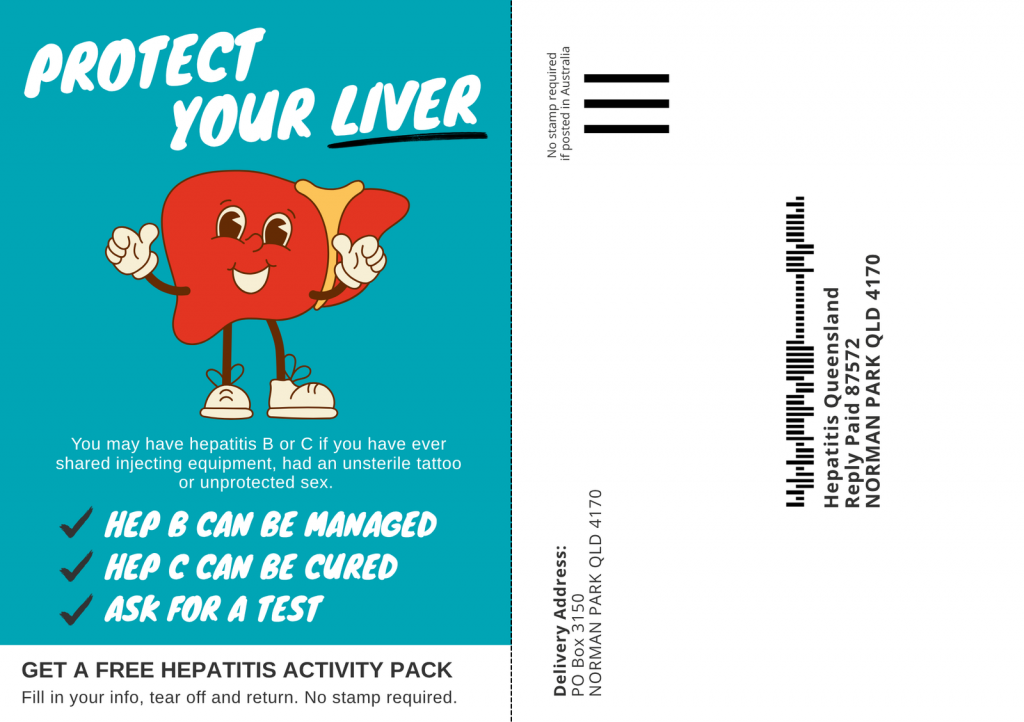
With Queensland Corrective Services and the Office for Prisoner Health and Wellbeing, we developed the Corrections Toolkit, bringing together resources for people in prison, correctional staff and visitors. It includes new hepatitis B and hepatitis C posters, a revised reply-paid prison postcard and an electronic version for use on in-cell iPads.
Blood-borne virus and Sexually Transmitted Infections education
We delivered 18 blood borne viruses and sexually transmitted infections education sessions during 2025–26, reaching 146 participants across medical centres, community corrections, alcohol and other drug services and Aboriginal and Torres Strait Islander health services. Seventeen participants were Queensland Health staff. Each session was tailored to the workforce in front of us.
Media
Coverage through 2025–26 increasingly positioned Hepatitis Queensland as a source of expert knowledge and advocacy on viral hepatitis, liver health and health equity, across major metropolitan and national outlets as well as specialist and sector publications. The liver cancer report drove much of it.
Beyond the report, we responded to emerging issues including hepatitis transmission in correctional settings and the growing use of unregulated injectable peptides. That reach took hepatitis prevention and testing to audiences a traditional awareness campaign would not have touched.
Lived experience and culturally safe practice were more visible in our media work this year than previously, with Strong Liver. Strong Mob. providing a platform for community voices and for community-led approaches to prevention and care.
Working together
Hepatitis Queensland extends its reach through partnerships and through the forums we convene, chair or sit on.
Custody to community
We joined the Post-Corrections Roundtable, facilitated by Brisbane South PHN, during 2025–26. Over the year the group broadened its focus to cover people still in custody as well as those after release, and has since adopted the name Custody 2 Community Health and Wellbeing Collective. Participation lets us strengthen cross-sector relationships, identify service gaps and contribute hepatitis-specific knowledge to wider health and wellbeing responses.
Aboriginal and Torres Strait Islander leadership
We continued to chair the Aboriginal and Torres Strait Islander Viral Hepatitis and Liver Health Advisory Committee, which provides a forum for Aboriginal and Torres Strait Islander perspectives, sector collaboration and information sharing. Discussions during the year included the re-funded B Stronger and Hep Check programs and hepatitis B in Far North Queensland.
National
Our partnership with Hepatitis Australia continued, including participation in the HepLink Australia Program and its work towards a national framework for consistent data collection. Our CEO sits on the Collective Governance Leadership Group and our HepLink Coordinator on the Working Group supporting implementation.
We contributed to national workforce and sector development through ASHM, including the HCV Priority Populations Online Learning Module Steering Committee and the C the Whole Story Forum III Steering Committee, which examined integrating hepatitis C care into housing, mental health and alcohol and other drug settings.
We co-convene the National Prisons Hepatitis Network Community Corrections Subcommittee, a quarterly forum where organisations across Australia compare approaches to hepatitis C testing and treatment in community corrections.
We also sat on the Queensland Prison Forum Steering Committee, helping shape the 2026 forum towards a strengths-based, solutions-focused approach. Our Communications and Health Promotion Manager presented From Awareness to Action: Supporting Hepatitis Elimination in Queensland Correctional Settings. The forum drew 120 attendees, its largest audience since it began.
Workforce and clinical education
During 2025–26, Hepatitis Queensland continued to strengthen relationships with participating health services and support the health workforce with practical resources for hepatitis B and hepatitis C screening, diagnosis and management.
We developed a new ‘Treating Hepatitis B in 5 Steps’ clinical mouse mat following consultation with stakeholders and clinical review. Designed specifically for use in clinical settings, the mouse mat provides a clear, at-a-glance guide to the key steps involved in hepatitis B management, from assessment and monitoring through to treatment and ongoing care.
The mouse mat format was chosen to provide clinicians with information that is visible, practical and easy to refer to during a consultation, without requiring them to navigate lengthy guidelines or search for information. It is designed to sit alongside existing clinical resources, including the ASHM Hepatitis B Decision-Making Tool, supporting clinicians to translate guidance into practice.
The new resource complements Hepatitis Queensland’s existing hepatitis C clinical mouse mat, providing a consistent suite of point-of-care resources to support healthcare professionals in identifying, managing and treating viral hepatitis.
Together, these resources help build workforce confidence and capability, support consistent clinical practice and make evidence-based hepatitis care more accessible across primary care and other healthcare settings.
The Future
Looking ahead, our hepatitis C work will focus on strengthening the way people access testing, liver health assessment, treatment and ongoing support, particularly as their circumstances change.
We are reviewing our community corrections clinic model to understand how hepatitis C testing and care can be delivered as effectively as possible, and how the model can better respond to the changing needs of people moving from custody back into the community. This includes looking at how we can strengthen continuity of care and support people to remain connected to treatment and follow-up after release.
Our hepatitis B work in the year ahead has two connected areas of focus.
The first is our Strong Liver. Strong Mob. partnership with the Hep B PAST PLUS team. Developed in the Northern Territory, the model demonstrates what is possible when community partnership, workforce development and culturally safe care are built into hepatitis B programs from the outset. It supports people who may never have previously been connected to care to be identified, monitored and treated. This work has already begun in Queensland, with the year ahead focused on extending the approach to more services and continuing to shape it alongside the communities involved.
The second is acting on the findings of our Brisbane South report. The report identifies where people are being lost between hepatitis B diagnosis and ongoing care, and what needs to change. Its recommendations are deliberately shared across the organisations best placed to act, rather than resting with Hepatitis Queensland and Brisbane South PHN alone. Our role is to help keep this work moving by supporting general practice to confidently monitor and treat hepatitis B, working alongside partners who reach communities that may not engage with mainstream services, and maintaining a statewide focus through the Queensland Hepatitis B Alliance.
Together, these areas of work will help build a more connected, accessible and responsive approach to viral hepatitis care, strengthening both the services people move through and the systems that support them.
Our Organisation
Board
Hepatitis Queensland is supported by a skilled Board that provides governance and strategic oversight.
- Chair: Lyn Hamill
- Deputy Chair: Dr Enoka Gonsalkorala
- Treasurer: Kaveen Bachoo
- Board Member: Dr Cindy Clayton
- Board Member: Rebekah Lamb (until December 2025)
- Board Member: Dr Jacqui Richmond
- Board Member: Jo Stone
- Board Member: Dr James Thomas
Staff
Our work is delivered by a small team. This year we welcomed new staff and farewelled colleagues who made valuable contributions during their time with us.
- Chief Executive Officer: A/Prof Anna Hawkes
- Programs Manager: Rachael Thompson (until September 2025)
- Office and Administration Manager: Jo Coffey (until May 2026)
- Cultural Lead, Aboriginal and Torres Strait Islander People: Nicky Newsley-Guivarra
- Communications and Health Promotion Manager: Jessie Badger
- Communications Officer: Amy Dunks
- Project Officer: Alex Morales (until March 2026)
- Project Officer: Mikayla Leslie (until April 2026)
- Project Officer: Stephanie Beames (until February 2026)
- Program Officer: Man Ting Hung
- Program Officer: Suzy McLucas
Governance
Reconciliation Action Plan
Hepatitis Queensland is committed to meaningful reconciliation and to strengthening our work with Aboriginal and Torres Strait Islander peoples and communities. During the reporting period we continued to progress our Innovate Reconciliation Action Plan 2.0, focusing on collaboration, cultural learning and improving access to viral hepatitis information, prevention and care.
Accreditation
Hepatitis Queensland met all accreditation requirements during the reporting period, reflecting our commitment to transparent governance, continuous improvement and safe, high-quality services.
Thank you
Hepatitis Queensland’s work is made possible by Queensland Health, Brisbane South PHN and Hepatitis Australia, and by the health services, community organisations, researchers and community members who work alongside us.
Financial statements